
Alstom Foundation announces new support for the Institute for Transportation and Development Policy’s child mobility and road safety initiative in southeastern Mexico
Alstom Foundation announces new support for the Institute for Transportation and Development Policy’s child mobility and road safety initiative in southeastern Mexico
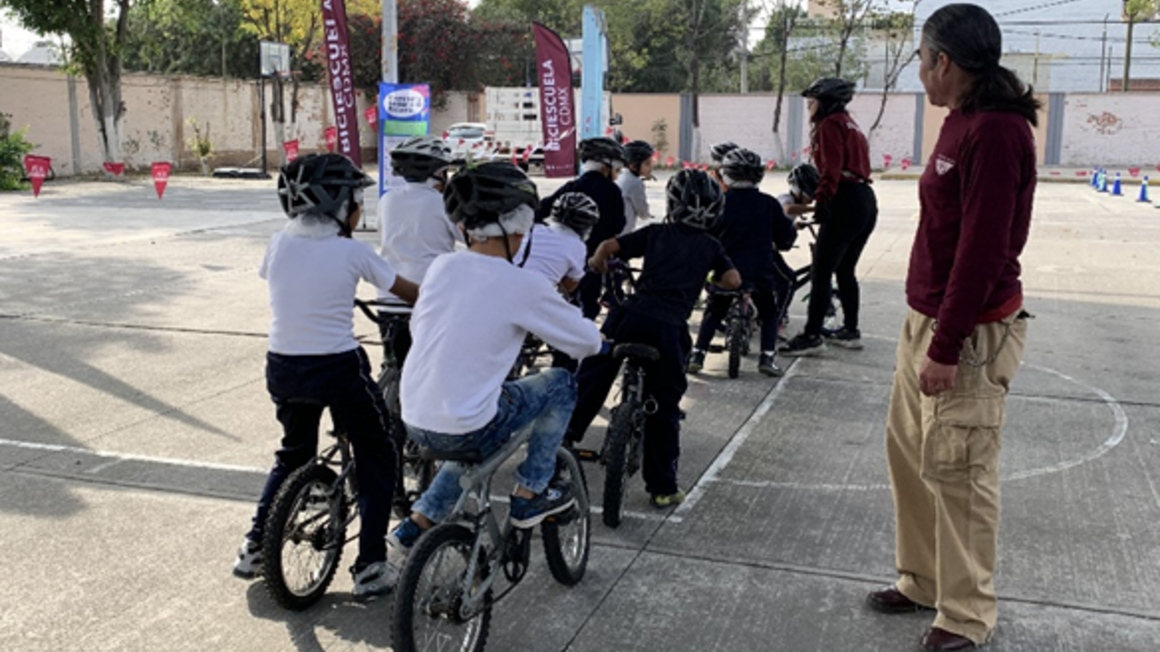
15 May 2026 – The Alstom Foundation is promoting the “Walk and Roll to School Day” (WRSD) project in Mexico, an initiative that began in November 2025 and aims to improve road safety in school zones and promote active mobility in communities across the state of Quintana Roo.
In Quintana Roo, rapid urban growth, an increased number of vehicles, and mobility patterns among residents and tourists have turned the streets into frequent scenes of traffic accidents. Between 2021 and 2022 alone, more than 2,500 traffic incidents were recorded following the post-pandemic recovery, and by 2024, an additional 7% increase in these incidents was reported. School environments reflect these challenges, with issues such as inadequate pedestrian infrastructure, a lack of safe conditions for active mobility, and high speeds in areas where children travel daily.
“We firmly believe that safe and sustainable mobility begins in communities. This project reflects our commitment to protecting children, supporting local authorities, and promoting more people-friendly urban spaces in Mexico.”
Managing Director for Northern Latin America at Alstom
In this context, the Alstom Foundation is contributing by funding the project and coordinating efforts with the Institute for Transportation and Development Policy (ITDP), the non-profit organization responsible for its implementation. The initiative is also being carried out in coordination with local authorities such as the Quintana Roo Mobility Institute (IMOVEQROO) and the Benito Juárez Municipal Planning Institute (IMPLAN), reinforcing a comprehensive approach.
Since its inception, the project has made progress in building institutional partnerships, conducting road safety analyses, and identifying priority areas for intervention in cities such as Cancún and Playa del Carmen.
Among the key achievements to date are:
-
A comprehensive assessment of 12 school zones in Cancún and Playa del Carmen, based on an analysis of traffic accidents and infrastructure conditions to identify high-risk areas.
-
The strategic selection of 5 priority schools, based on technical evidence and in coordination with local authorities, to implement high-impact interventions.
-
Technical field visits conducted with authorities and specialists, which identified critical issues such as unsafe crossings, inadequate sidewalks, and risks to pedestrians.
-
Conceptual proposals in development for urban interventions aimed at comprehensively transforming school environments and improving road safety and active mobility.
-
Coordination efforts with key institutions such as IMOVEQROO and IMPLAN, strengthening inter-institutional coordination to ensure the project’s viability and scalability.
-
Compilation of information on the main accessibility-related issues.
-
Three schools have been selected to host the WRSD in Cancún
-
In Playa del Carmen, two schools have been shortlisted; however, the final decision on intervention will be confirmed with municipal authorities.
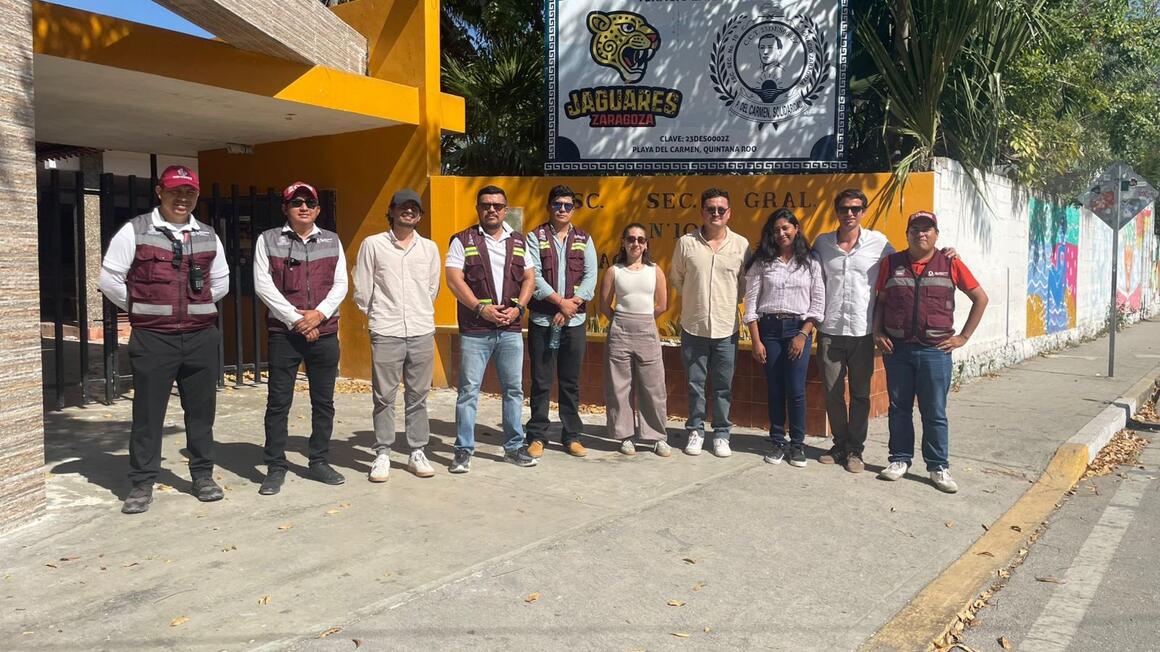
Work is also underway to design road safety workshops for students, teachers, and caregivers, as well as to develop a technical guide that will enable this model to be replicated in other cities in the southeast of Mexico.
These initiatives aim to reduce road risks, promote safer travel habits, and contribute to the creation of more accessible and sustainable urban environments for school communities.
In the coming months, the project plans to conduct surveys to understand school mobility patterns, hold community workshops, and organize the “Walk and Ride to School” event, scheduled for October 2026. Alstom employees are also expected to participate as volunteers in community activities.
“For us at the Institute for Transportation and Development Policy, this is a great opportunity to work with Alstom Mexico and local authorities to improve school environments and help ensure that children and their families have better conditions for walking and cycling,” said Bernardo Baranda Sepúlveda, the Institute’s regional director for Latin America.
Maite Ramos Gómez, Alstom’s general manager for Northern Latin America and the project’s promoter, commented: “We firmly believe that safe and sustainable mobility begins in communities. This project reflects our commitment to protecting children, supporting local authorities, and promoting more people-friendly urban spaces in Mexico.”
Established in November 2007, the Alstom Foundation supports and funds projects which serve to improve living conditions in, and economic prospects of, communities located near Alstom’s facilities and sites around the world. All projects are presented and supported by Alstom employees who team up with expert partners and look to the Alstom Foundation to make a positive impact on the local environment. All projects are conducted in strong partnership with local or global NGOs with a proven ability to implement the projects on the ground.